 Speed Khabar

Introduction
The growing tension between the United States and Iran has once again placed the Middle East at the center of global attention. Military operations, missile strikes, and diplomatic threats have increased fears that the conflict could expand beyond regional borders.
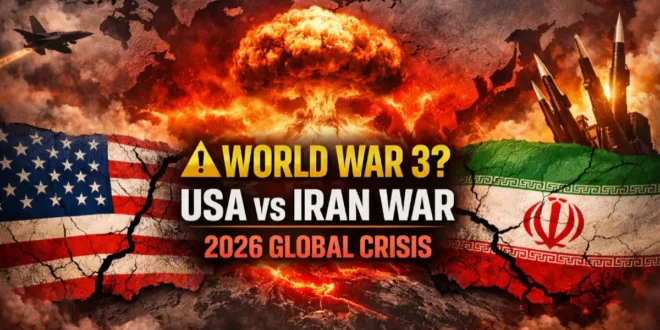
Many analysts and political observers are now asking a serious question: Could the USA–Iran war lead to World War 3?
While global leaders are trying to prevent escalation, the situation remains volatile. The Middle East has long been a geopolitical hotspot, and any large-scale conflict involving powerful nations can have consequences far beyond the region.
This article explains the causes of the conflict, the latest developments, the global reaction, and whether this war could lead to a broader international crisis.
Background of USA–Iran Tensions
The tension between the United States and Iran did not start overnight. It has roots going back several decades.
Key historical events include:
• The Iranian Revolution of 1979
• Long-standing economic sanctions against Iran
• Disputes over Iran’s nuclear program
• Military tensions in the Persian Gulf
• Proxy conflicts across the Middle East
These issues have created a fragile relationship between the two countries for many years.
What Triggered the Current Conflict?
The recent escalation reportedly began after military actions targeting strategic facilities and military positions in the region.
Several developments increased tensions:
• Airstrikes on military installations
• Drone and missile attacks
• Rising tensions in the Persian Gulf
• Military mobilization by regional allies
Each side accuses the other of aggression, increasing the risk of further confrontation.
Military Strength of Both Countries
Understanding the military capabilities of the United States and Iran helps explain why the conflict is closely watched worldwide.
United States Military Strength
The United States has one of the most powerful militaries in the world.
Key strengths include:
• Advanced fighter jets such as F-35 and F-22
• Aircraft carrier strike groups
• Global satellite surveillance systems
• Long-range precision missiles
The US military also has bases throughout the Middle East, which increases its strategic reach.
Iran Military Capabilities
Iran may not match the US in conventional military power, but it has developed significant regional capabilities.
Key strengths include:
• Ballistic missile programs
• Drone warfare technology
• Naval forces in the Persian Gulf
• Proxy alliances across the region
Iran also relies on asymmetric warfare strategies to counter stronger opponents.
Could This Conflict Lead to World War 3?
One of the biggest fears surrounding the USA–Iran war is that other major powers could become involved.
Several global powers have strategic interests in the region, including:
• Russia
• China
• European nations
• Gulf countries
If multiple countries become involved militarily, the conflict could expand into a broader global confrontation.
However, most experts believe world leaders will attempt to prevent such an escalation.
Global Economic Impact
A war involving major oil-producing regions could have significant consequences for the global economy.
Possible impacts include:
Oil Price Increase
The Middle East supplies a large portion of the world’s oil. Any disruption can push prices higher.
Inflation
Higher oil prices increase transportation and production costs worldwide.
Stock Market Volatility
Global markets often react strongly to geopolitical tensions.
Impact on the Middle East
The Middle East would face the most immediate consequences of the conflict.
Possible effects include:
• Increased military activity
• Regional instability
• Refugee crises
• Economic disruption
Neighboring countries may also face security challenges.
How the World Is Responding
Global leaders and international organizations have called for diplomacy and restraint.
Efforts include:
• Emergency UN meetings
• Diplomatic negotiations
• Calls for ceasefire agreements
• International mediation attempts
Many countries are trying to prevent further escalation.
Conclusion
The USA–Iran conflict is one of the most serious geopolitical crises in recent years. While tensions remain high, diplomatic efforts continue to prevent a broader war.
Whether this conflict remains regional or evolves into a larger global confrontation will depend on political decisions in the coming months.
For now, the world watches closely as leaders attempt to manage one of the most dangerous international situations of the decade.