 Speed Khabar

Introduction
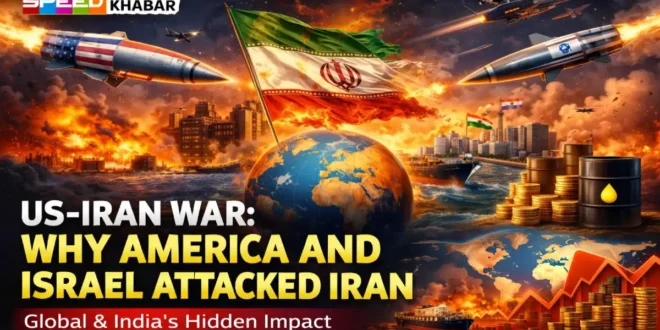
Tensions in the Middle East have escalated dramatically after the United States and Israel launched military strikes on Iran, triggering one of the most serious geopolitical crises in recent years. The conflict has quickly expanded beyond a regional dispute and is now influencing global politics, energy markets, and economic stability. The war has already led to missile strikes, disruptions in oil supply routes, and growing fears of a wider regional conflict involving several Gulf countries.
This article explains the background of the conflict, why the United States and Israel decided to attack Iran, and what impact this war may have on Iran, Gulf countries, the global economy, and especially India.
Background of the Conflict
Tensions between Iran, Israel, and the United States have been building for many years. The main reasons behind the hostility include Iran’s nuclear program, its missile development, and its support for armed groups across the Middle East.
Israel has long considered Iran’s nuclear ambitions a direct threat to its national security. The United States has also imposed economic sanctions on Iran for years, accusing Tehran of pursuing nuclear weapons and supporting militant groups in the region. Diplomatic negotiations between Iran and Western countries over nuclear restrictions repeatedly failed, increasing mistrust and military tensions.
In late February 2026, these tensions escalated when U.S. and Israeli forces carried out coordinated airstrikes on several Iranian cities, including Tehran and Isfahan, targeting military bases and government facilities. The strikes marked the beginning of open conflict between the countries.
Why the United States Attacked Iran
The United States stated several reasons for its military operation against Iran.
1. Iran’s Nuclear Program
Washington believes Iran has been advancing its nuclear technology to a point where it could eventually develop nuclear weapons. The U.S. claims the strikes were intended to halt Iran’s nuclear progress and prevent it from becoming a nuclear power.
2. Missile and Military Threat
Iran has been developing long-range ballistic missiles capable of reaching Israel and U.S. military bases in the Middle East. The United States argues that destroying these capabilities was necessary to maintain regional security.
3. Protection of U.S. Allies
The United States maintains strong alliances with Israel and several Gulf countries such as Saudi Arabia and the United Arab Emirates. American officials say the operation aimed to protect these allies from potential Iranian attacks.
4. Regional Influence
Iran has influence over several armed groups in the Middle East, including Hezbollah and other militias. The U.S. views these networks as a threat to stability and sees military pressure as a way to weaken them.
Why Israel Joined the Attack
Israel played a central role in the strikes against Iran.
National Security Concerns
Israel considers Iran its biggest strategic threat. Iranian leaders have repeatedly criticized Israel and supported groups that oppose it. Israeli leaders believe that preventing Iran from developing nuclear weapons is essential for their country’s survival.
Pre-emptive Strategy
Israeli intelligence agencies reportedly believed Iran was getting closer to nuclear capability. Israeli officials argued that waiting longer could make Iran impossible to stop militarily.
Regional Power Balance
Israel also seeks to limit Iran’s influence across the Middle East, especially in Syria and Lebanon where Iran-backed groups are active.
Iran’s Response to the Attacks
Iran quickly retaliated after the strikes.
Iran launched missiles and drones toward Israeli territory and several U.S. military bases across the Middle East. Some attacks also targeted energy infrastructure and strategic facilities in nearby Gulf countries.
One of the most significant moves by Iran was threatening shipping through the Strait of Hormuz, one of the most important oil routes in the world. Around 20% of global oil supply passes through this narrow waterway, making it a crucial point for international energy trade.
Impact on Iran
The war has had severe consequences for Iran itself.
Infrastructure Damage
Airstrikes targeted military bases, energy facilities, and government buildings across several Iranian cities.
Economic Pressure
Iran’s economy was already struggling under sanctions, and the war has worsened the situation by disrupting oil exports and trade.
Environmental and Human Impact
Bombings on fuel depots and industrial facilities have created fires and pollution risks in major cities, raising concerns about long-term environmental damage.
Impact on Gulf Countries
The war has also spread instability across the Gulf region.
Many Gulf countries host U.S. military bases or energy infrastructure, making them potential targets in the conflict. Missile strikes and security fears have disrupted oil production, shipping, and energy exports in countries such as Saudi Arabia, Bahrain, and the UAE.
The conflict has also increased military tensions in the region, with several governments strengthening air defenses and security around critical infrastructure.
Impact on the Global Economy
The war has already triggered significant economic consequences worldwide.
Rising Oil Prices
Oil prices surged sharply after the conflict began because of fears that supplies from the Middle East could be disrupted.
Energy Market Instability
Global energy markets depend heavily on Middle Eastern oil and gas. Disruptions in the Strait of Hormuz could affect millions of barrels of oil shipments every day.
Inflation Risks
Higher fuel prices increase transportation costs, which can lead to higher prices for goods and services worldwide.
Impact on India
India is closely monitoring the situation because the Middle East is one of its most important energy suppliers.
Oil Supply Risks
India imports a large portion of its crude oil from Middle Eastern countries. If shipping routes become unsafe or oil prices rise significantly, India’s fuel costs could increase.
Business and Transport Costs
Higher oil prices may increase transportation costs and lead to inflation in sectors such as manufacturing, logistics, and aviation.
Energy Shortages
Some sectors in India have already reported disruptions in fuel supplies due to global energy market instability caused by the conflict.
What Could Happen Next
Experts believe the conflict could move in several directions.
- Diplomatic negotiations may begin if international pressure increases.
- Regional escalation could occur if more countries become involved.
- Economic consequences may deepen if oil supply disruptions continue.
The situation remains highly unpredictable, and the next few weeks could determine whether the crisis turns into a wider regional war or moves toward negotiations.
Conclusion
The United States and Israel’s attack on Iran marks a major turning point in Middle Eastern geopolitics. While the operation was launched to limit Iran’s nuclear ambitions and military power, the consequences are spreading far beyond the region.
From rising oil prices to economic uncertainty and security risks, the war is already affecting countries across the world. For nations like India that depend heavily on Middle Eastern energy, the conflict highlights the importance of geopolitical stability and diversified energy sources.
As the world watches closely, the outcome of this crisis will likely shape global politics and economic trends for years to come.

